

Premium custom printed boxes — designed, printed, and built in the USA

When You Don't Need the Whole Box
Custom sleeve boxes (also called box sleeves or packaging sleeves) are open-ended cartons that slide over a product, tray, or inner box and rely on a friction fit to stay in place. Think of them as a tuck end box without the closing tuck panels—simple, clean, and cost-effective.
You see them all the time in the frozen food aisle: a printed sleeve slides over a sealed, unprinted meal tray to create a finished retail package.
The open design lets you show more of the product while still adding print space for details, instructions, or graphics—without the cost of a full folding carton box. This style of sleeve box packaging is especially useful when you want shelf presence and product visibility at the same time.
When a Box Just Doesn't Fit
Some products simply don't lend themselves to conventional packaging. Rolled textiles, bundled products, and other soft goods can be difficult or unnecessarily expensive to put in a box. Sometimes a printed box sleeve is the most practical way to add branding and product information.
Sleeve packaging is uniquely suited to squeezable soft goods.
Gently compress the product to slide it through the sleeve. Once inside, it naturally expands against the sleeve for a snug, secure fit. The result can be surprisingly good packaging.
Efficiency That Pays Off
Sleeves use less material than fully enclosed cartons, making them an economical form of secondary packaging that can reduce both packaging and shipping costs.
When Should You Consider Sleeve Boxes?
Custom printed sleeve boxes are a good choice for:
Frozen food trays and bowls
Printed sleeves over sealed trays add branding, photos, and cooking instructions.Printed oversleeves for small corrugated boxes
Turns plain shippers into retail-ready product packaging.Multipack food packaging
Wrap-around sleeves bundle multiple items while adding space for key product information.Soft goods like rolled towels or 3-packs
Keeps textiles bundled while adding branding and product details.Tray-and-sleeve boxes
A tray with a sliding sleeve — classic retail product packaging.Short sleeves for extra visibility
Shows more of the product while keeping packaging costs down.
Printed Sleeves as Secondary Packaging
Sleeve boxes are often used as secondary packaging to add branding and required information while keeping the product visible. They’re especially useful when you want a finished retail look without the cost of a fully enclosed folding carton.
The Tease — It’s All About the Partial Reveal
Get a Quote in 3 Simple Steps
1.
Choose Your Box Style
2.
Enter Your Dimensions
3.
Get Instant Quote

Style of box
style bullets
•
Style
Size:
Length
Width
Depth
Height
Options:
UV
Hang Tab
Window
Volume
value
value
value
value
value
value
value
value
18pt total costs
value
value
value
value
value
value
value
value
18pt cost/box
value
value
value
value
value
value
value
value
24pt total costs
value
value
value
value
value
value
value
value
24pt cost/box
value
value
value
value
value
value
value
value
How Does Box Pricing Work?
Help →
Paper Thickness
Print Finishes
Measure
Reading a Ruler
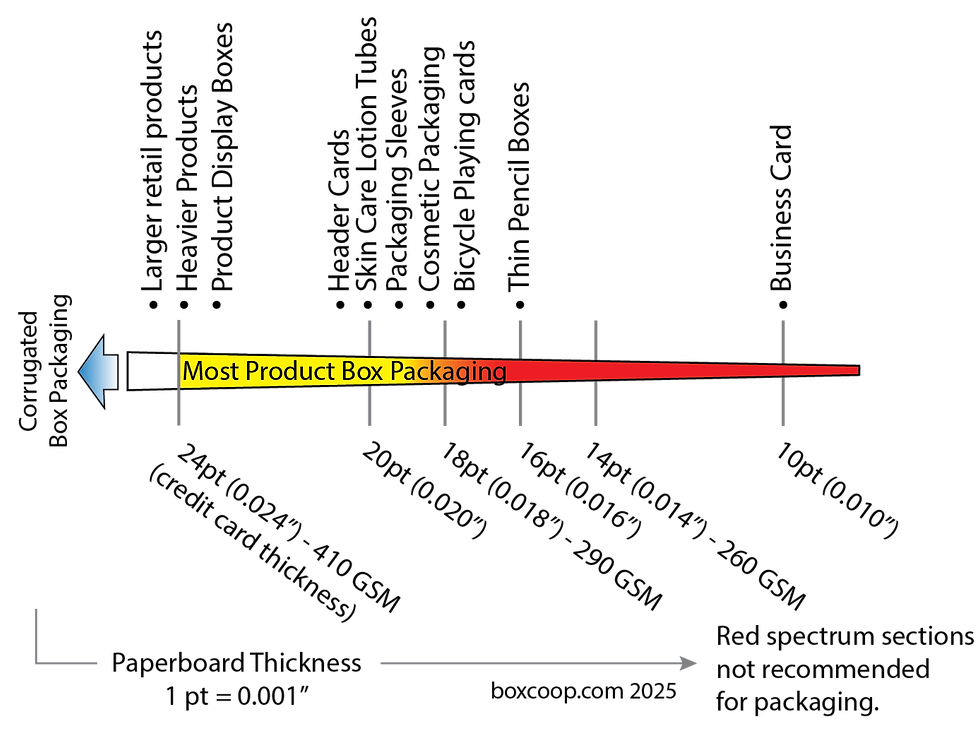
Paperboard Thickness Chart
.png)
What's a Good Paper Thickness for My Box?
-
16pt (0.016″ ≈ slightly thicker than a business card)
-
Best for very small product boxes.
-
Rule of thumb: footprint (floor of the box) of about 1″ × 1″ or smaller.
-
-
18pt (0.018″ ≈ just under credit-card thickness)
-
Strong enough for most cosmetics, food, and shelf packaging.
-
Cost-effective and versatile — the “everyday” choice for custom boxes.
-
Rule of thumb: footprint of about 2.75″ × 2.75″ or smaller.
-
-
24pt (0.024″ ≈ credit-card thickness)
-
Stiffer and more rigid, with a premium feel in hand.
-
Ideal for larger, heavier, or higher-end products where strength and presentation matter.
-
Rule of thumb: footprint of about 3″ × 3″ or larger.
-
Cardstock.... or Paperboard?
The paper behind your packaging matters
You may have seen box specs like “18pt cardstock” online — but not all 18pt paper is created equal.
• Cardstock: A thick paper used for crafts, postcards, and invitations. It’s cheaper and works for lighter packaging — but it lacks the stiffness and durability needed for most product boxes.
• Paperboard: A stiffer material engineered specifically for packaging. It folds cleanly, glues reliably, and holds its shape to protect your product — and your brand — on the shelf.
The key is knowing what you’re buying. In retail, your product box is what closes the sale — so it needs to perform and look its best. That’s why we use a quality paperboard — so your packaging doesn’t just hold together, it helps sell what’s inside.
Find Out What the Reveal Costs
Get a quick quote below — all you need is your dimensions.
And if you’re not sure where to measure, we’ll walk you through it.
Have Questions?
Drop us a line - We're Here to Help. We'll Get Back to You Right Away.
But packaging projects are rarely that simple. If you're launching multiple products,
We can often get you better costs.
Want a quick answer? Include your phone number and we'll give you a call. Prefer to talk now? Reach us at 1.800.555.1778.
Let's See What We Can Do →
We're here to help you sell your product. Let's talk about your packaging.
When You Want to Show a Bit More
Sometimes a partial reveal works best.
Some products simply need to be seen, felt, or even smelled. Think soaps, bath products, textiles, or anything where color, texture, or fragrance is part of the buying experience. A sleeve keeps the product accessible while still giving you plenty of room for branding and product information.

Is There a Better Choice for Your Product?
.png)

.png)

.png)


This page is dedicated to sleeve boxes. But they're just one of many packaging styles available.
The film strip above gives you a peek at a few of the folding carton styles you'll find on our Custom Product Boxes page.
Sleeve Options
Sleeve packaging can include display features and structural add-ons to match how your product is sold.
Glued, wrap-around, or tab-and-slit sleeve construction
Hang tabs for retail peg and hook displays
Built-in partitions to separate or protect multiple items
Die-cut windows for product visibility and retail presentation
Frequently Asked Questions About Sleeve Boxes
What’s the Difference Between a Sleeve and a Full Box?
A sleeve has open ends and slides over your product or container. It offers branding and structure without full enclosure.
Are Sleeve Boxes Eco-Friendly?
Yes. They’re made from recyclable paperboard and use less material than full cartons. FSC and recycled stock options available.
What are sleeve boxes used for?
Sleeve boxes are commonly used as secondary packaging for products like frozen food trays, multipacks, soft goods, and bundled retail items. A printed sleeve slides over a tray, product, or inner box to add branding and required information while keeping the product visible.
What’s the Minimum Order Quantity for Packaging Sleeves?
MOQ typically starts at 500 units but may vary depending on specs and finish.
Start Your Custom Sleeve Packaging Project
Tell us what your product is and how you plan to use the sleeve—we’ll recommend the best layout, material and finish to make it shine.
Work With Specialists in Paperboard Packaging
At The Box Co-op, custom folding cartons are all we do. From sleeve boxes to full product cartons, our team helps brands create packaging that performs on shelf and delights in-hand.