

Premium custom printed boxes — designed, printed, and built in the USA
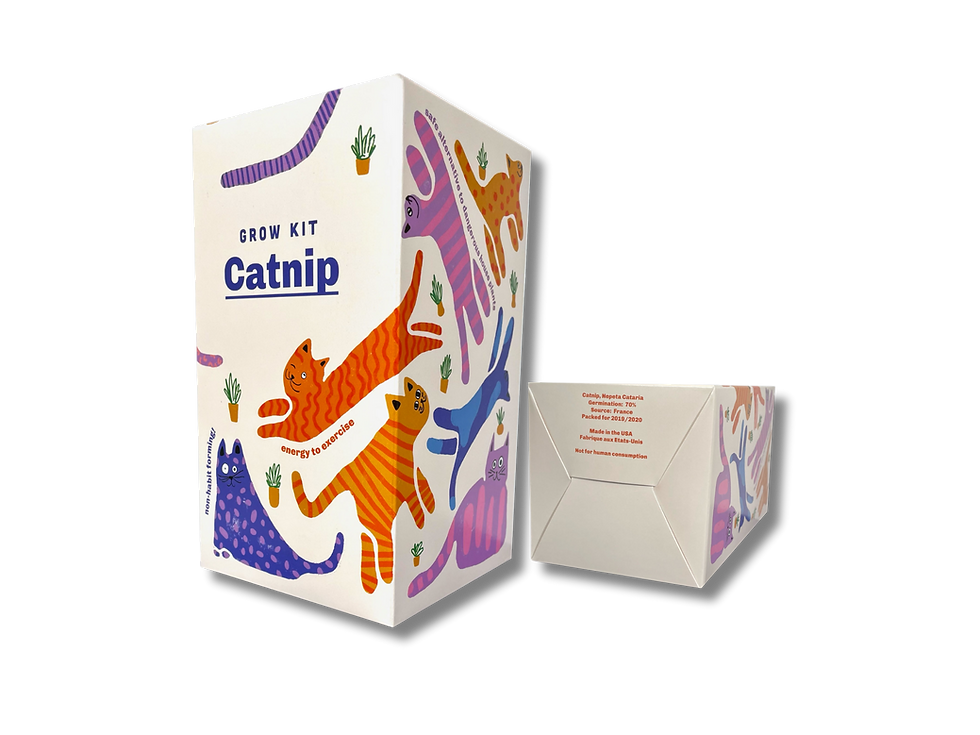
A More Affordable Alternative to an Auto Lock Bottom Box
Snap-lock bottom boxes, also known as 1-2-3 bottom boxes, provide more strength and carrying ability than a standard tuck end box.
They're still a tuck-top style, but their interlocking base distributes product weight better and creates a more secure floor.
Snap-lock bottoms work well for light to moderately heavy products, especially those with a wider footprint. Their flat, stable base also makes them a good choice for presentation boxes that sit on a retail shelf.
In terms of carrying ability, snap-lock bottoms fall between tuck end boxes and the stronger, pre-glued auto-lock bottom.
When Should You Consider Crash Lock Bottom Boxes?
When Should You Consider Crash Lock Bottom Boxes?
Snap-lock bottom boxes are a good choice if you have:
Products that need more support than a standard tuck end box
Light to moderately heavy retail products
Wider products that benefit from a stable floor
Cost-sensitive packaging where an auto-lock bottom may be more than you need
Fulfillment where a few extra seconds of box setup is acceptable
Balancing Cost and Assembly Speed
Snap-lock and auto-lock bottom boxes can often handle the same types of products. The main difference is how the bottom is constructed.
Auto-lock bottoms arrive pre-glued, so the floor forms automatically when the carton is opened. Snap-lock bottoms are folded and locked during setup, which takes a few extra seconds but costs less to manufacture.
A Simple Rule of Thumb
If you need more support than a tuck end but don't need the convenience or additional strength of a pre-glued auto-lock bottom, a snap-lock bottom is often the more economical choice.
Crash locks — when you need more than a tuck end
Get a Quote in 3 Simple Steps
1.
Choose Your Box Style
2.
Enter Your Dimensions
3.
Get Instant Quote

Style of box
style bullets
•
Style
Size:
Length
Width
Depth
Height
Options:
UV
Hang Tab
Window
Volume
value
value
value
value
value
value
value
value
18pt total costs
value
value
value
value
value
value
value
value
18pt cost/box
value
value
value
value
value
value
value
value
24pt total costs
value
value
value
value
value
value
value
value
24pt cost/box
value
value
value
value
value
value
value
value
How Does Box Pricing Work?
Help →
Paper Thickness
Print Finishes
Measure
Reading a Ruler
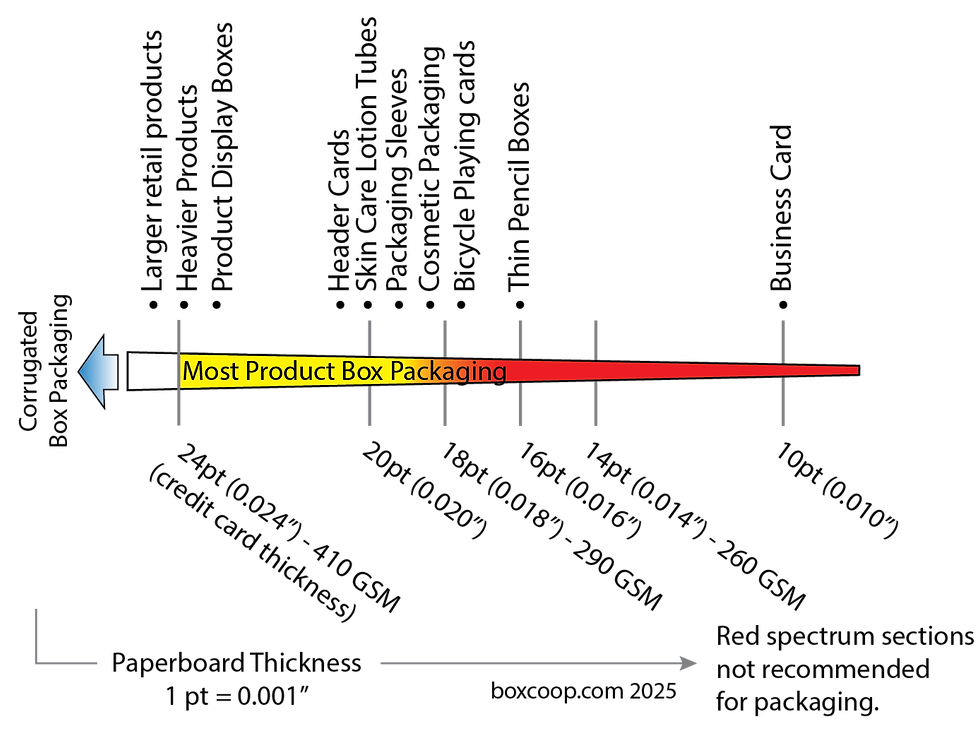
Paperboard Thickness Chart
.png)
What's a Good Paper Thickness for My Box?
-
16pt (0.016″ ≈ slightly thicker than a business card)
-
Best for very small product boxes.
-
Rule of thumb: footprint (floor of the box) of about 1″ × 1″ or smaller.
-
-
18pt (0.018″ ≈ just under credit-card thickness)
-
Strong enough for most cosmetics, food, and shelf packaging.
-
Cost-effective and versatile — the “everyday” choice for custom boxes.
-
Rule of thumb: footprint of about 2.75″ × 2.75″ or smaller.
-
-
24pt (0.024″ ≈ credit-card thickness)
-
Stiffer and more rigid, with a premium feel in hand.
-
Ideal for larger, heavier, or higher-end products where strength and presentation matter.
-
Rule of thumb: footprint of about 3″ × 3″ or larger.
-
Cardstock.... or Paperboard?
The paper behind your packaging matters
You may have seen box specs like “18pt cardstock” online — but not all 18pt paper is created equal.
• Cardstock: A thick paper used for crafts, postcards, and invitations. It’s cheaper and works for lighter packaging — but it lacks the stiffness and durability needed for most product boxes.
• Paperboard: A stiffer material engineered specifically for packaging. It folds cleanly, glues reliably, and holds its shape to protect your product — and your brand — on the shelf.
The key is knowing what you’re buying. In retail, your product box is what closes the sale — so it needs to perform and look its best. That’s why we use a quality paperboard — so your packaging doesn’t just hold together, it helps sell what’s inside.
See What It Costs for a Little Bit More
Get a quick quote below — all you need is your dimensions.
And if you’re not sure where to measure, we’ll walk you through it.
Have Questions?
Drop us a line - We're Here to Help. We'll Get Back to You Right Away.
But packaging projects are rarely that simple. If you're launching multiple products,
We can often get you better costs.
Want a quick answer? Include your phone number and we'll give you a call. Prefer to talk now? Reach us at 1.800.555.1778.
Let's See What We Can Do →
We're here to help you sell your product. Let's talk about your packaging.
A Snap-Lock Box That Doubles as a Display Box
Snap-lock bottoms are commonly used as retail display boxes because their interlocking base provides a stable foundation for the products inside.
Like an auto-lock display carton, the closing lid can be designed to fold back into a pop-up advertising header, while perforated front and side panels tear away to expose the products.
A Flatter Floor for Better Presentation
But unlike an auto-lock bottom, whose overlapping glued bottom panels can create an uneven interior floor, a snap-lock bottom has a flat inside floor that helps products sit straight and look neatly presented.
Once opened at the retailer, the same carton that contained and protected the products becomes a shelf or counter display.
Because a snap-lock bottom doesn't require a pre-glued base, it's also be a more economical choice when the product weight doesn't require the additional carrying strength of an auto lock.

Is There a Better Choice for Your Product?
.png)

.png)

.png)


This page is dedicated to crash lock bottom boxes. But they're just one of many packaging styles available.
The film strip above gives you a peek at a few of the folding carton styles you'll find on our Custom Product Boxes page.
....And the "1-2-3"?
A snap-lock bottom is also commonly known as a “1-2-3 bottom” because of the sequence used to assemble its interlocking base.
The side and back panels fold inward and interlock in a woven pattern. The front panel—or “tongue”—then folds over the base and pushes through the interlocked panels to lock the floor securely in place.
The sequence in which three of the four bottom panels interlock gives the 1-2-3 bottom its name.
Don’t worry—it’s much easier to assemble than it sounds.
Frequently Asked Questions
Are Snap Lock Bottom Boxes Strong Enough for Heavy Items?
They are ideal for light to moderate weight products. For heavier products, we can discuss reinforced structures or inserts.
Do These Boxes Require Glue or Tape?
No. The interlocking flaps create a secure bottom without adhesive.
Can I Get Custom Inserts for Extra Protection?
Yes. We can create paperboard or foam inserts to keep products stable and protected.
Are Snap Lock Bottom Boxes Recyclable?
Yes. All of our paperboard boxes are recyclable, and sustainable stock options are available.